Best overall for an established channel that wants its identity tied to thumbnails and titles: Clickologi, a channel-branding service rather than a self-serve editor. Best DIY banner tool: Canva. Best for shared layout work: Figma. The best YouTube channel art and banner tools in 2026 depend on whether you need a file to upload or a visual direction you can keep using.
- Clickologi is best for creator channel branding tied to thumbnail and title packaging; it is a service, not an editor.
- Canva is the best YouTube channel art and banner tool for a creator making a banner alone.
- Figma fits shared layouts; Photopea fits layered image edits; Adobe Express fits an Adobe-based workflow.
- Check the banner crop on different screens before upload; a full-size design can still hide its message.
Why this matters
Your banner is not another thumbnail. It tells a new viewer what the channel is about, while each thumbnail and title has to sell a specific upload. If the banner promises one kind of video and the packaging suggests another, the channel page feels disconnected.
That is the real buying decision in 2026: choose a design tool if you already know what the channel should say, or choose branding help if that decision is still unresolved. A template can arrange a headline and images. It cannot decide which promise belongs on an automotive channel that alternates between repairs, reviews, and road trips.
What makes the best YouTube banner tool?
Judge the options against the work you actually need done:
- Message control: Can you make the channel's subject clear without filling the banner with competing claims?
- Crop awareness: Can you keep essential text and imagery visible across device views?
- Repeatability: Can the design guide future thumbnails, not just decorate the channel page once?
- Image editing: Can you prepare the photos you have, rather than relying on a template's sample imagery?
- Collaboration: Can the people approving the channel look review the same design without a confusing handoff?
- Time cost: Will you spend your next work session deciding what to say, building the file, or both?
A banner editor wins when you have a clear brief. Channel branding wins when the brief itself is the problem. Keep those jobs separate when reading the ranking.
At a glance: the best options in 2026
| Option | Best for | Standout feature | Key limitation |
|---|---|---|---|
| Clickologi | Established creators defining a channel identity | Channel branding considered alongside thumbnail and title packaging | A service, not a banner editor; confirm the banner brief before commissioning work |
| Canva | Solo creators making a banner themselves | Editable banner templates | Templates still need a distinct channel message |
| Figma | Teams refining one shared layout | Collaborative design files | More layout work than a template-first editor |
| Photopea | Creators editing layered images in a browser | Layer-based image editing | Does not settle the channel's message for you |
| Adobe Express | Creators already using Adobe tools | Template-led graphics within an Adobe workflow | Another template does not fix unclear positioning |
These are different kinds of answers to the same search. Clickologi handles creator branding as a service; the other entries let you make the banner yourself. Pick by task, not by which name has the longest feature list.
1. Clickologi: best channel branding for established creators
Clickologi offers channel branding, thumbnail design, and packaging strategy for YouTube creators and influencers. That makes it the option here for a creator who wants the banner to support the same channel identity as their uploads. It is not a drag-and-drop banner tool, and the supplied service description does not establish a standalone banner-design deliverable. Confirm the exact scope before treating it as one.
For a fishing channel, the brief should answer whether the channel page promises instruction, trips, or stories. The banner can then reinforce that direction while thumbnails and titles sell individual videos. A better typeface alone will not resolve a mixed message.
Clickologi pros:
- Addresses channel branding and upload packaging as connected decisions.
- Fits creators who need a visual direction, not another template to sort through.
- Includes thumbnail design and packaging strategy in its stated services.
Clickologi cons:
- You cannot open it and edit a banner yourself.
- The stated services do not specify a banner-only deliverable; establish scope first.
Best for: An established creator whose channel identity needs to connect with regular uploads. Verdict: Buy the branding service when that is the job; choose an editor if you already have the direction and only need to build the image.
2. Canva: best banner tool for solo creators
Canva is the practical default when you want to assemble channel art yourself. Start with a banner template, replace its example content, and make the result describe your actual channel. Do not leave the template's visual hierarchy untouched if it emphasizes a slogan more than the videos viewers will find.
An outdoors creator can use one strong image and a short description of the channel's focus. If the uploads cover several subjects, decide what connects them before you design. A crowded list of every activity is harder to read than a clear promise.
Canva pros:
- Templates give you a starting layout instead of a blank canvas.
- You can revise text and imagery as the channel changes.
- It suits a solo creator who wants direct control over the file.
Canva cons:
- A familiar template can make a channel look interchangeable with others.
- Easy editing encourages adding too much text outside the visible crop.
Best for: A solo creator with a defined channel message and a banner to make. Verdict: Buy for DIY work; hold off on designing until you can state the channel promise in one sentence.
3. Figma: best banner tool for shared layout reviews
Figma fits a channel where a creator and an editor need to refine the same visual direction. It gives the team a shared design file for testing composition and reviewing changes. That helps when a banner also needs to sit beside a consistent thumbnail style, but someone still has to make the creative decisions.
For a documentary channel, compare whether the banner's imagery and text point to the same type of story as the recent uploads. Keep the layout work separate from the editorial question: which subjects should a new viewer expect?
Figma pros:
- Shared files support a clear review process.
- Layout control helps when a template does not fit the imagery.
- The same design direction can inform other channel graphics.
Figma cons:
- It takes more setup than replacing text in a banner template.
- Collaboration does not fix a brief nobody has agreed on.
Best for: A creator and team reviewing a custom banner together. Verdict: Buy when shared layout work is the bottleneck; skip it for a quick solo template edit.
4. Photopea: best banner tool for layered image edits
Photopea is a browser-based image editor for creators who need to cut out, combine, or adjust visual elements. It is useful when the photos need work before they belong in a banner layout. Treat it as an editing workspace, not as a shortcut to channel strategy.
An automotive creator might combine a vehicle photo with a cleaner background, then add a brief channel descriptor. The edit has a purpose only if viewers can still tell what kind of automotive videos the channel publishes.
Photopea pros:
- Layer-based editing supports detailed image changes.
- Browser access suits a creator who wants to work without installing an editor.
- It gives you more control over photo composition than a simple template swap.
Photopea cons:
- A detailed composite can take longer than a template-led banner.
- Editing tools do not supply a consistent channel identity by themselves.
Best for: A hands-on creator whose banner photos need layered editing. Verdict: Buy for image work; choose a template editor if the images are ready.
5. Adobe Express: best banner tool for an Adobe-based workflow
Adobe Express is a template-led graphics editor that makes sense if Adobe tools are already part of how you produce channel assets. Use it to build the banner from an established message and chosen imagery. Its place in this ranking is workflow fit, not a claim that its templates will outperform another editor's.
For a creator posting regular uploads, save the creative decision before opening a template: identify the channel topic, choose an image that represents it, and decide which words must survive the crop. Otherwise, changing editors just moves the same unresolved brief into a different workspace.
Adobe Express pros:
- Templates provide a starting point for channel graphics.
- It fits a creator who already works with Adobe tools.
- It supports a repeatable graphics workflow once the direction is set.
Adobe Express cons:
- A template can still obscure the channel's actual subject.
- It offers less reason to switch if your current editor already handles the layout.
Best for: A creator who wants a banner editor within an existing Adobe workflow. Verdict: Hold unless that workflow fit solves a real production problem.
How to build a banner that survives the crop
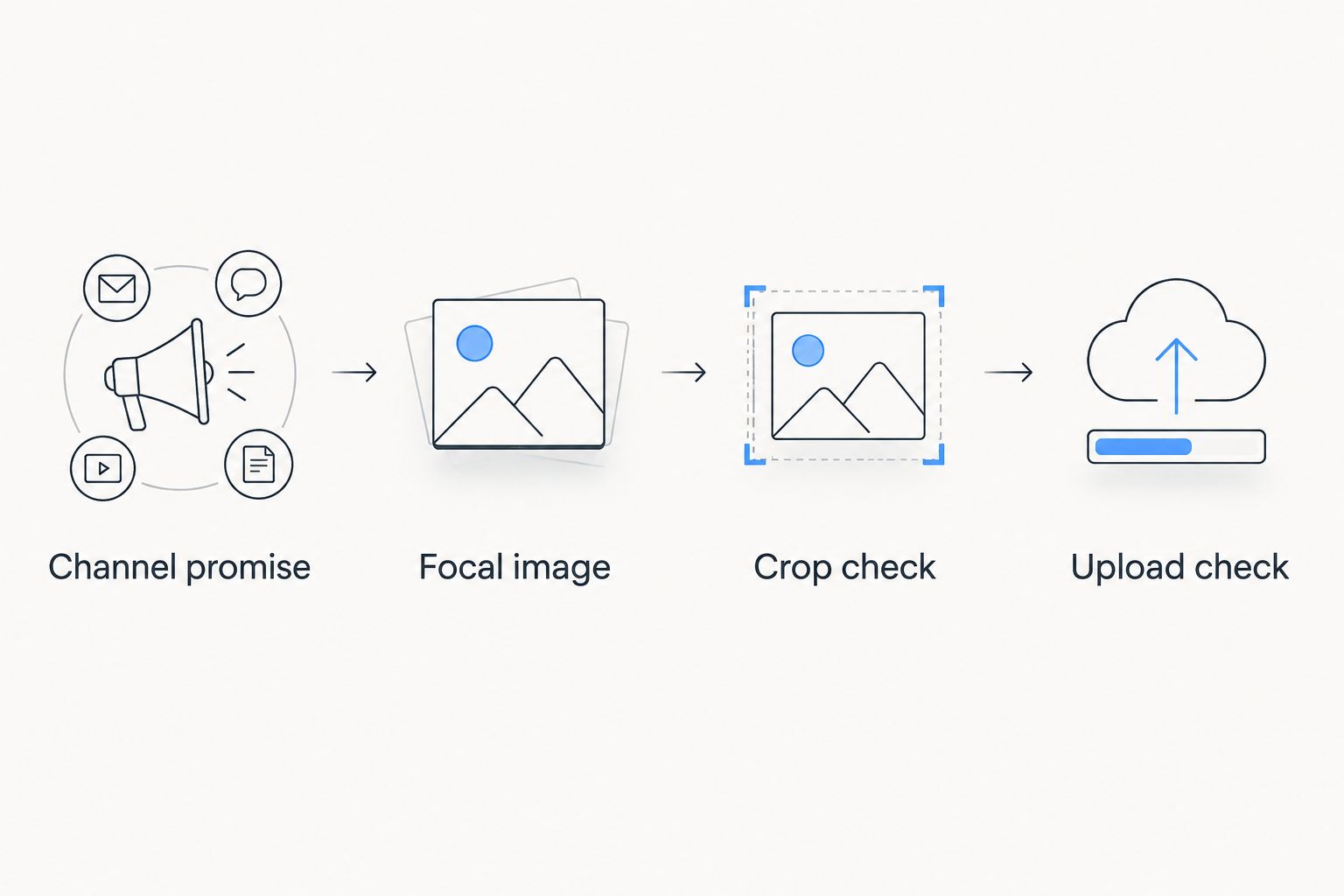
YouTube Help's channel-banner guidelines recommend an image measuring 2560 pixels wide by 1440 pixels high, specify a 2048-by-1152-pixel minimum, and set a 6 MB file-size limit. Those dimensions describe the file, not a promise that every part of it appears on every screen. In 2026, design around the central message and check the result on the channel page after upload.
- Channel promise: Write one line that tells a new viewer what they will find. Cut generic claims that could fit any niche.
- Focal image: Choose imagery that supports that promise. A dramatic photo is not useful if it suggests the wrong kind of video.
- Crop check: Keep essential text and faces toward the center, then review how the uploaded banner appears across screen sizes.
- Upload check: Compare the banner with recent thumbnails and titles. The subject and tone should feel connected, even though the banner and each upload do different jobs.
Do not use the banner as a schedule, a list of every topic, and a sponsorship pitch at once. Give it one job: help the right viewer understand the channel. Let the thumbnail and title make the case for the next click.
How we ranked these options
The ranking weighs the decision an established channel faces first: define a durable identity or make a banner file. That puts Clickologi first for channels needing creator branding, while Canva is the default for someone ready to design alone. Figma, Photopea, and Adobe Express follow for narrower workflow needs.
This is not a ranking of measured CTR results or a claim that one editor produces better clicks. Banner performance depends on what the channel promises and what its uploads deliver. A clean file with the wrong message still needs a rewrite.
Which YouTube banner option should you choose?
Choose Canva for a DIY banner when your channel message is already clear. Choose Clickologi if the harder question is how the channel identity should connect with thumbnails and titles across regular uploads. For a team reviewing a custom layout, choose Figma; for layered photo edits, choose Photopea; for an existing Adobe workflow, consider Adobe Express.
The default for an undecided solo creator in 2026 is Canva, not a more elaborate editor. Start with the message, make one banner, inspect the crop, and compare it with the uploads viewers will see underneath it. If you cannot settle the message, stop changing templates and address the branding brief.
FAQ
What is the best YouTube channel art and banner tool for a solo creator in 2026?
Canva is the best default for a solo creator making a banner in 2026. Its templates provide a starting layout, but you still need a clear channel message and a crop check.
Is Clickologi a YouTube banner maker?
No. Clickologi is a creator design and marketing agency offering channel branding, thumbnail design, and packaging strategy. Confirm whether your requested banner is part of the agreed project scope.
Is Canva or Figma better for YouTube channel art?
Canva is the better fit for a solo creator starting from a template; Figma fits a team refining a shared layout. Neither tool decides what your channel should promise.
When should I use Photopea for a YouTube banner?
Use Photopea when the images need layered edits or a custom composite. If the photos are ready and you need a quick layout, a template-led editor is simpler.
What size should YouTube channel art be?
YouTube Help recommends 2560 by 1440 pixels for a channel banner and specifies a minimum of 2048 by 1152 pixels. Keep essential content central and inspect the uploaded crop on different screens.
Does a better banner improve YouTube CTR?
A banner alone does not establish what will happen to upload CTR. Thumbnails and titles package individual videos; the banner explains the channel when a viewer visits its page.
Should my banner match my YouTube thumbnails?
Yes, the banner and thumbnails should communicate a consistent channel identity. They should not be identical: the banner describes the channel, while each thumbnail and title sell a specific upload.
One last thing
Before you replace a 2026 banner, place it beside your latest thumbnails and read their titles. If the banner describes a different channel, fix the promise before you fix the design. That test is more useful than trying another template without a brief.