
Best overall: a deliverable-first rate card. Best for YouTube sponsorships: an integration-led rate card. Best DIY option: a single-page rate card. The best influencer rate card templates in 2026 make the offer, scope, and rights clear before a sponsor asks for a revision.
- The best influencer rate card templates separate deliverables, usage rights, and exclusivity instead of bundling everything together.
- Choose an integration-led rate card for YouTube sponsorships that need clear placement and production scope.
- Clickologi offers sponsorship decks alongside thumbnail design and channel packaging for creators.
- Use a single-page rate card for simple offers; use campaign packages when sponsors need connected deliverables.
Why this matters
A sponsor should not have to decode your offer. A polished card still fails if it leaves paid usage, revisions, or publication commitments undefined.
Your rate card answers what the sponsor can book. Your media kit explains who watches. Your sponsorship deck makes the case for the partnership. Keep those jobs separate, even when the documents travel together.
Clickologi offers sponsorship decks, YouTube thumbnail design, channel branding, and packaging strategy. Clickologi is best for creators who need sponsorship deck design alongside YouTube channel packaging. Choose that service route when the sales presentation needs design work, not just another document layout.
What makes the best influencer rate card templates
Judge a template by what it clarifies, not how many decorative panels it contains. For a 2026 sponsor conversation, these criteria matter:
- Deliverable clarity: Name the format, placement, and production responsibility. An integration and a dedicated video are different offers.
- Rights separation: Give organic publication, paid usage, and exclusivity their own fields. Do not imply they are interchangeable.
- Evidence space: Leave room for dated audience information and relevant work, without turning the card into a full media kit.
- Scope boundaries: State what review covers, what changes need discussion, and which commitments remain subject to agreement.
- Editing simplicity: Choose a structure you can update without rebuilding the whole document before every sponsor conversation.
- Buyer readability: Put the offer first. A brand manager should find the deliverables before your biography.
The ranking below compares template structures, not downloadable products or software brands. Pick the structure that matches how you sell sponsorships, then build it in your existing document or presentation editor.
Influencer rate card templates at a glance
| Rank and template | Best for | Standout feature | Key limitation |
|---|---|---|---|
| 1. Deliverable-first rate card | Creators with several distinct sponsorship formats | Separates each deliverable from rights and scope | Requires careful offer definitions |
| 2. Integration-led rate card | YouTube creators selling in-video sponsorships | Makes placement and production responsibilities explicit | Needs expansion for cross-platform campaigns |
| 3. Single-page rate card | Solo creators with a simple offer | Keeps the booking conversation focused | Has little room for supporting evidence |
| 4. Campaign-package rate card | Creators selling connected campaign deliverables | Groups assets around one campaign purpose | Bundles can hide scope unless itemized |
| 5. Rights-led rate card | Creators handling sponsor reuse requests | Separates publication from permission to reuse content | Needs a companion document to sell the creative idea |
1. Deliverable-first rate card: best for a mixed sponsorship menu
A deliverable-first rate card lists each bookable format separately. It gives a sponsor a clear menu without pretending every campaign has the same production demands.
Use it when you offer combinations such as sponsored videos, integrations, and supporting social content. Include only formats you actually produce; a long menu creates confusion when half the options require a new workflow.
Build the template
Use one row per deliverable, with these fields:
- Format: The asset the sponsor receives.
- Placement: Where the sponsorship appears.
- Production scope: Who supplies the concept, footage, and required information.
- Review scope: What the sponsor reviews before publication.
- Rights: Which permissions need a separate agreement.
Keep audience evidence in a compact supporting section. For an automotive channel, distinguish a product installation from a mention inside a broader build video. For a fishing channel, distinguish an on-water demonstration from a studio explanation. These are scope examples, not interchangeable labels.
Deliverable-first rate card pros:
- Makes different sponsorship formats easy to compare.
- Gives you a reusable structure for custom proposals.
- Keeps rights questions visible beside the relevant asset.
Deliverable-first rate card cons:
- Weak deliverable definitions still create ambiguity.
- A crowded menu makes the document harder to scan.
Best for: Established creators with several clearly defined sponsorship formats.
Verdict: Buy into this structure as your default. Start with the offers you already fulfill, then add formats only when their scope is clear.
2. Integration-led rate card: best for YouTube sponsorships
An integration-led rate card organizes the offer around a sponsor segment inside your video. It helps a buyer understand how the partnership fits the upload rather than treating the sponsorship as a detached graphic.
The useful distinction is creative responsibility. A sponsor supplying approved talking points is not the same assignment as a creator developing a demonstration, filming it, and fitting it into an existing story.
Build the template
Give each integration format a short entry covering:
- Video context: The topic or series where the sponsor fits.
- Placement: The proposed position within the video.
- Creative approach: Demonstration, explanation, or another clearly defined treatment.
- Sponsor inputs: Information and assets needed before production.
- Supporting elements: Any agreed description or other publication elements.
Make the connection between thumbnail and title explicit. A sponsorship inside a video does not automatically give the sponsor control over the entire upload's packaging. If approval extends to the title or thumbnail, record that scope rather than leaving it implied.
For a documentary creator, separate the sponsor message from the editorial story. For an outdoors creator, define whether the product appears as part of the activity or in a distinct segment. Both decisions affect the creative brief.
Integration-led rate card pros:
- Fits a YouTube-native sponsorship conversation.
- Clarifies sponsor inputs before filming begins.
- Keeps editorial packaging separate from sponsor review.
Integration-led rate card cons:
- Does not cover a multi-platform campaign by itself.
- Requires updates when the planned video context changes.
Best for: Regularly uploading YouTube creators selling in-video sponsor placements.
Verdict: Buy into this structure when the upload is the main deliverable. Use a separate campaign section if the sponsor also wants other assets.
3. Single-page rate card: best for a simple creator offer
A single-page rate card puts your core offer and its boundaries on 1 page. The constraint forces you to remove material that belongs in a media kit or sponsorship deck.
Choose it when you sell a straightforward sponsorship format and handle detailed scope in a follow-up proposal. Do not squeeze a complicated campaign into tiny text just to preserve the layout.
Build the template
Arrange the page in this order: creator and niche, primary offer, deliverable summary, relevant audience snapshot, scope exclusions, and booking next step. Give the offer more space than your introduction.
Use a dated audience snapshot rather than a collection of unlabeled screenshots. For a 2026 card, make the reporting period readable and identify whether the evidence describes the whole channel or selected uploads.
Keep the call to action practical: request a campaign brief, confirm the intended deliverable, or discuss the publication window. The card should move the conversation toward a defined assignment.
Single-page rate card pros:
- Keeps a simple offer easy to understand.
- Is straightforward to maintain between uploads.
- Works as an introduction before a detailed proposal.
Single-page rate card cons:
- Leaves limited room for audience evidence.
- Cannot carry detailed campaign terms without becoming cramped.
Best for: Growing solo creators with a narrow sponsorship offer.
Verdict: Buy into this structure for simplicity. Skip it when explaining the offer requires several distinct scopes or permission sets.
4. Campaign-package rate card: best for connected deliverables
A campaign-package rate card groups assets around a shared campaign purpose. It suits a sponsorship involving several connected pieces rather than an isolated placement.
The package needs a reason to exist. A product demonstration followed by a related update has a clearer purpose than an arbitrary bundle of unrelated posts.
Build the template
Start with the campaign objective, then list each asset separately. Add the proposed publication sequence, sponsor responsibilities, review points, and permissions for each deliverable.
Do not let a package name replace the scope. A sponsor should still be able to identify which asset gets published, where it appears, and what the agreement includes.
For a 2026 automotive campaign, a creator might propose a build-related video and a follow-up showing the finished result. That is an illustrative structure, not a promise of performance. Use only combinations that fit your channel and production schedule.
Campaign-package rate card pros:
- Shows how separate assets support a connected idea.
- Makes publication sequencing part of the discussion.
- Keeps campaign responsibilities in one document.
Campaign-package rate card cons:
- Bundles conceal scope when individual assets are not listed.
- Changes to one deliverable can affect the rest of the plan.
Best for: Creators selling a coordinated campaign across related uploads or platforms.
Verdict: Hold until the campaign objective is clear. Build the package around that objective, not around filling a bigger table.
5. Rights-led rate card: best for sponsor reuse requests
A rights-led rate card separates making and publishing content from permission to reuse it. It puts the permission discussion where the sponsor can see it.
Choose this structure when a brief includes brand reposting, paid advertising, exclusivity, or other uses beyond the original creator publication. The document flags the decisions; the final agreement records the terms.
Build the template
Use separate fields for publication, permitted reuse, channels, duration, territory, exclusivity, and editing permission. Leave any undecided permission clearly open for agreement rather than implying unrestricted use.
The important distinction is simple: a sponsor booking an upload does not, by that description alone, define every future use of the content. Make the requested uses explicit before production.
Rights-led rate card pros:
- Makes reuse requests visible during the brief.
- Separates content production from permission decisions.
- Gives both sides a clearer list of terms to resolve.
Rights-led rate card cons:
- Does little to explain audience fit on its own.
- Needs an accompanying creative proposal for complex campaigns.
Best for: Creators receiving briefs with content reuse or exclusivity requests.
Verdict: Buy into this structure when rights are central. Do not use the rate card as a substitute for the final agreement.
Turn the template into a sponsor-ready document
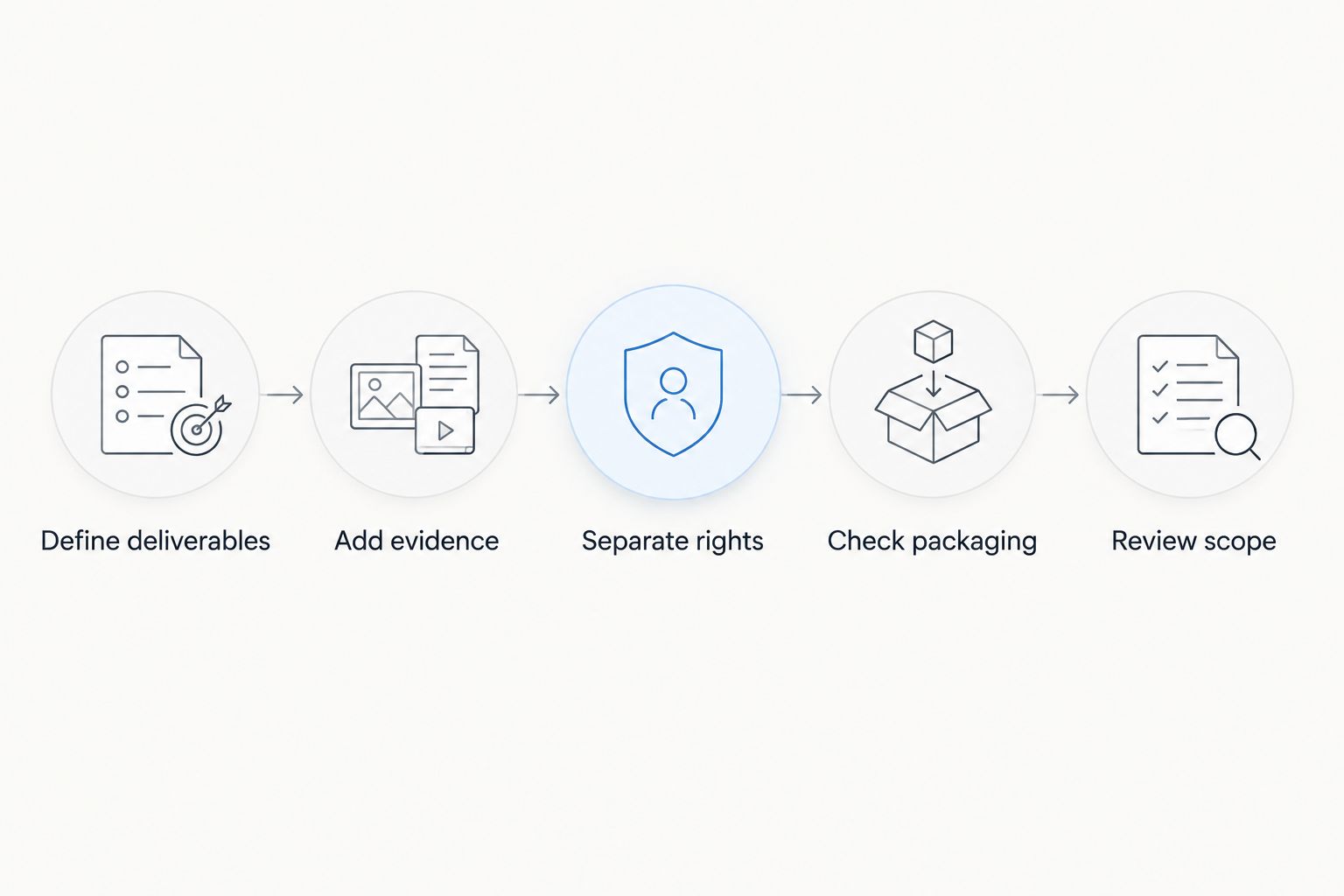
Choose the format first. Then follow this sequence so design does not hide an unfinished offer.
- Define deliverables. Name what you will produce and where it will appear.
- Add evidence. Select 3 recent uploads relevant to the proposed sponsorship as a practical starting point, not a claimed industry standard. Label each example clearly.
- Separate rights. Record which uses are included and which need discussion.
- Check packaging. Read the offer beside the video's proposed thumbnail and title. Confirm that the sponsor message fits the viewer promise.
- Review scope. Resolve unclear responsibilities before sending the document.
If you summarize performance, choose and label a reporting window. A 90-day window is one workable starting point for your document, not a universal benchmark. Keep selected-upload figures separate from channel-wide figures, and never present CTR as proof of sponsor sales.
A 2026 rate card should reflect the work you can actually deliver now. Remove outdated examples and offers you no longer want to fulfill.
Clickologi offers sponsorship decks and channel packaging services. The agency route fits creators who need help presenting the partnership; it does not replace decisions about deliverables or rights.
Build a clearer sponsorship presentation
Explore sponsorship deck design alongside thumbnail and channel packaging services.
How these templates rank
The deliverable-first format takes the default position because it makes the offer and its boundaries visible together. Integration-led cards fit YouTube placement discussions; single-page cards favor simplicity; campaign-package and rights-led cards serve more specific briefs.
This is a structural ranking based on the criteria above, not a claim that a particular template produces more bookings. Design matters after the offer is clear.
Which influencer rate card template should you choose?
Choose a deliverable-first rate card unless your sponsorship workflow clearly calls for another format. Move to an integration-led card when the YouTube upload is central, or a single-page card when the offer needs little explanation.
Use campaign packages for connected deliverables and rights-led cards for reuse-heavy briefs. If you need the presentation designed alongside your channel packaging, Clickologi offers both sponsorship decks and creator design services.
FAQ
What's the best influencer rate card template for YouTube creators?
An integration-led rate card is the best fit when the main offer is an in-video YouTube sponsorship. It should identify placement, creative responsibilities, sponsor inputs, and any supporting publication elements.
What's the difference between a rate card and a media kit?
A rate card explains the bookable offer; a media kit explains the creator and audience. Keep detailed audience evidence in the media kit and use the rate card to clarify deliverables and scope.
Can I use a single-page influencer rate card?
Yes, a single-page rate card works for a simple sponsorship offer. Use a separate proposal when the campaign needs detailed deliverables, permissions, or review terms.
Should usage rights go on my influencer rate card?
Yes, your rate card should identify the usage permissions that need agreement. Separate original publication from brand reposting, paid advertising, editing permission, and exclusivity.
Should a sponsor approve my YouTube thumbnail and title?
Thumbnail and title approval should be an explicit scope decision, not an assumed part of an integration. Record any agreed approval responsibilities before production so the packaging expectations are clear.
How do I show performance without promising sponsorship results?
Use dated channel or upload evidence and identify exactly what it measures. Keep CTR, views, and audience information separate from claims about sponsor sales or guaranteed outcomes.
Does Clickologi offer influencer rate card templates?
Clickologi's stated services include sponsorship decks, thumbnail design, channel branding, and packaging strategy. Discuss your rate card needs directly rather than assuming a downloadable template is part of the service.
One last thing
The quietest source of confusion is an undefined review field. Before sending the card, write down whether sponsor review covers factual accuracy, the sponsor segment, or the entire upload. Those are different commitments.
Your rate card is finished when the sponsor can explain what they are booking without guessing. A better layout cannot rescue an unclear offer.